
Adoor Gopalakrishnan is a name you are bound to hear if you speak with a film student in India. The filmmaker, who made his debut film in the early 1970s, has an impressive body of work that differs from the usual assumptions of a foreign viewer about Indian cinema. His films are not maximalist displays of song-and-dance sequences that rely on excess. Instead, they are often highly restrained, layered, and enigmatic, focusing on character work as much as on a meticulous use of cinematic tools at hand. His 1994 film, ‘Vidheyan,’ displays a similar level of restraint and precision while analyzing the crooked power dynamic in rural India.
Although set in a small village, the themes from this Malayalam-language film also translate in an urban context where prejudices breed or bloom more subtly than their rural counterparts. They usually become apparent in unlikely places and in an unsuspected manner. The village in ‘Vidheyan’ makes those prejudices unavoidable. The script captures them through the evolving dynamic between Bhaskara Pattelar (played by Mammootty), a man born in a privileged family, and Thommy (played by M. R. Gopakumar), whom he hires against his consent.
Bhaskara is a ruthless patriarch in a position of power, while Thommy is an outsider in the village and belongs to a different religion. Their initial interactions place them in those contrasting positions, hinting at a revenge tale, only to gradually become a psychological investigation of power itself. Bhaskara’s authority is established from his actions as well as everyone else’s reactions. He brandishes his mustache, beats anyone on a whim, and threatens gun violence if something doesn’t go exactly his way. As it happens, Thommy is reduced to his unshakable loyalty, and Saroja (Bhaskara’s wife, played by Tanvi Azmi) is reduced to her overbearing silence and unexpressed agony.
Through that meticulous characterization, this tense drama becomes an eerie horror tale, where the peril doesn’t lurk in the shadows. Instead, it makes its presence known and demands uncompromising devotion to its unflinching horror. The script builds that creepy presence through a series of actions where Bhaskara exercises control out of an underlying fear of losing it. Most of it happens within the confines of the village, which makes him all the more menacing, and Thommy’s psychological degradation all the more terrifying. Instead of seeking escape, Thommy starts relishing the fleeting comforts of this association. Despite the lighthearted tone of brief moments exploring his joy, they reveal a kind of kindness that Bhaskara establishes his stronghold with.
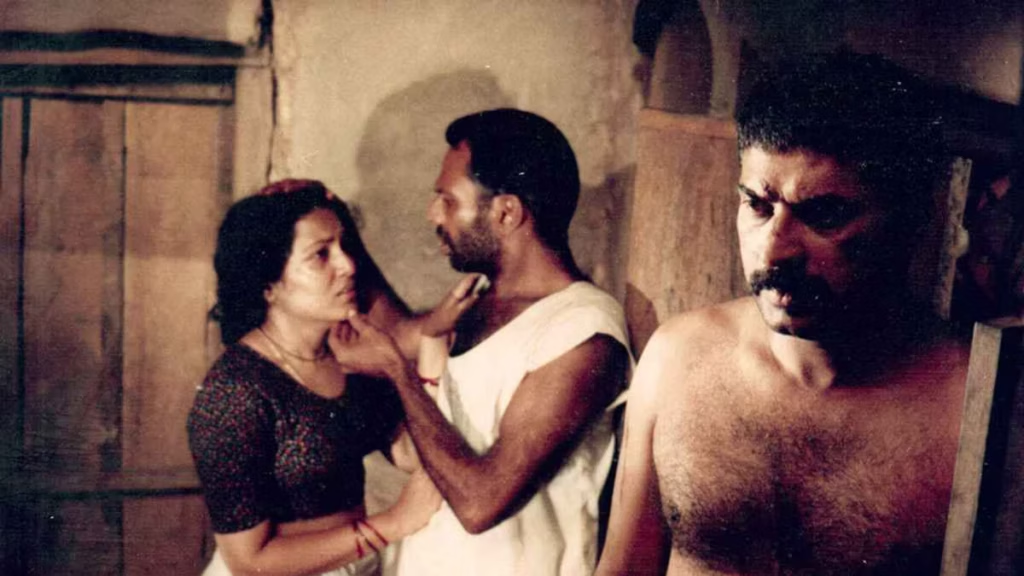
Mammootty plays Bhaskara as a smug, entitled man with a numbingly fragile ego. Bhaskara never accepts any criticism and refuses to make even the slightest change for anyone else’s convenience, let alone basic human decency. So, his privilege operates on multiple fronts of caste, religion, and gender. Everyone around him abides by his say, which fuels his arrogance even further. Some of the dialogues hint at him living by the codes of conduct of yesteryears, when everything happened solely according to his will. That also makes him a man in constant denial, even if his arrogant self-assurance doesn’t make it seem so.
All these qualities make him an antagonist against everyone, including Thommy. So, initially, the film operates almost like a simmering tale of vengeance, as Mammootty’s unnerving intensity as Bhaskara is pitted against Thommy’s helplessness and lack of privilege. Slowly, it reveals the debilitating hold Bhaskara builds over Thommy’s mind. Neither the direction nor the performance dials down the contempt against Bhaskara. Instead, the film amps up the tension to show how venomous someone like him can be without a shred of guilt or accountability. Even at times when Bhaskara feels relatively powerless, he never becomes kinder toward anyone.
The camera also plays an important role in establishing these emotional layers, offering or denying dignity to its characters based on Bhaskara’s skewed perception. What’s not in the frame becomes just as ominously evident as what’s in it. He sits comfortably in his seat as everyone brings him what he seeks. They often remain out of the frame, being demeaned or harassed. When he attacks someone, they lose their composure, while he stays in the frame, rendered like a victorious, unbeatable hero, as he sees himself. It all turns this film into an immersive character portrait that could have drawn criticism for glorifying his insolence. Yet, it evades that blame by painting a karmic retribution without turning into a conventional morality tale, as his demise is driven less by an external force and more by his own flaws. By the end, similar nuances leave us with far more to reflect upon than a simplistic choice between good and evil.
Vidheyan movie links: Letterboxd, IMDB, Wikipedia
For more movie reviews and recommendations, visit our homepage
1970s 2023 Action Adventure alfred hitchcock Australian films black and white classic movies classics comedy Crime criterion collection denzel washington Drama folk horror French movies Gangster Giallo great films Horror indian movies lucio fulci Movies to watch Neo noir netflix netflix movies new movies new releases Noir Period Drama police procedural Psychological thriller Revenge reviews ridley scott Sci-Fi Sci fi supernatural suspense The Genre Junkie Thriller toshiro mifune war Western whodunit